Confessions of a former councillor
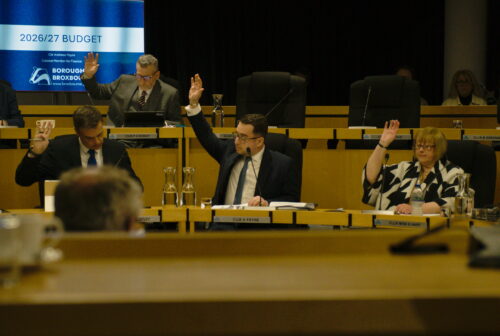
I have just stepped down as a councillor after eight years. It has been my proudest achievement to date to serve as an elected representative for the town where I grew up, but I made the decision to stand down mainly because I cannot carry on doing the job and progress my career at the same time. The demands are too great.
I was elected at 24 and I am standing down at 32. I think that says a lot in itself. Younger councillors are still the exception, not the norm. The LGA’s 2022 census found only 15.7 per cent of councillors were aged under 45, compared with 43 per cent of the adult population.
At the other end, 42.2 per cent of councillors were aged 65 or over, compared with 17 per cent nationally. The average age of a councillor was 59.5. That gap matters, because it shapes who is in the room when decisions about growth, housing and change are made.
Over my eight years, I served as Cabinet Member for Finance, Cabinet Member for Planning, Chair of the Planning Committee for four years, and Vice Chair of the Planning Committee for a year. Those roles gave me a front row seat to how local government makes decisions, how planning politics really works, and why being pro-development is much easier to demand than to deliver.
Why councils struggle to say yes
The narrative from our industry and from Government is that councils need to be more pro-development. I do not disagree. We need more homes, more infrastructure and more investment. But the problem is not simply that councils are anti-growth. It is that local government is often not representative of the places it governs, and that has real consequences for how decisions are made.
That is not a criticism of individual councillors. I know from experience many work extremely hard and do the best they can. But it does shape how local politics works. There are very few incentives for someone working full time even to contemplate standing for council. I was lucky. I worked for employers who understood and supported my role, and many of the meetings I needed to attend were in the evening rather than during the day. Even then, with a commuting job, it was often a struggle to race out of central London for a 7pm meeting that might run until 10pm, with dinner written off in the process.
If the people making decisions are less likely to be younger, renting, commuting long distances or struggling to get on the housing ladder, the system will naturally hear less from those groups. In planning policy and delivery, that matters. The people who most need development are often the least represented in the room.
Who councillors listen to
I saw that in another way too. When I worked for an MP, a striking amount of casework came from people on the council housing waiting list, even though MPs do not control those lists. As a councillor, I received far fewer of those emails. Instead, councillors were much more likely to hear from people objecting to development. That creates a serious imbalance. The people most likely to benefit from more housing are often not the ones contacting councillors directly.
Future residents do not vote in local elections. The young family priced out of an area rarely turns up to object to a scheme. The people who do show up are often those who already live nearby and are worried about the impact of change. Their concerns can be entirely legitimate. Poor design, weak infrastructure and overstretched services are real issues. But it does mean the politics of development starts from an unbalanced position.
Visible change is politically risky. A new block of flats is visible. A young person forced to move away because they cannot afford to live locally is not. A construction site is visible. The economic damage caused by under-supply is not. In local politics, the cost of saying yes is immediate, while the cost of saying no is often hidden.
The politics of no
That imbalance does not just affect who gets heard. It affects how councils behave. Faced with loud opposition and little organised support, some councillors fall into the trap of thinking that saying no is always the safer option. But that can mean cutting off their nose to spite their face. No development will ever be perfect, yet schemes are sometimes refused on tenuous grounds, leaving councils with less influence over the final outcome and fewer benefits secured for local people.
A more confident approach is to engage, negotiate and improve. I saw that first-hand in Broxbourne with the Google data centre. By engaging with the proposal rather than simply rejecting it, we were able to secure targeted schools workshops and a more detailed Section 106 package for the area. That is what being pro-development should mean in practice: not accepting everything uncritically, but using engagement to shape better schemes and better benefits.
Bigger councils, wider gaps
This is already a difficult political environment for pro-development decision-making. It may become harder still as councils move towards larger unitary structures. Bigger councils with fewer councillors may be more efficient on paper, but they risk widening the gap between elected members and the communities they serve.
Larger electoral areas, heavier workloads and greater distance from neighbourhoods will make it even harder for younger working people to see council service as realistic. And if they follow the model of many existing unitary councils, with more daytime meetings, that will further deter those more likely to benefit from development from standing.
What has to change
Make councils look more like the places they serve
If we want councils to be more pro-development, we need to be more honest about the system we have built. Councils need to be more representative. That means making it easier for younger people, working people and people with caring responsibilities to become councillors.
Make the role workable
The role itself needs to fit modern life better. Meeting times, allowances and practical support all matter. Local democracy cannot rely on people having large amounts of free time.
That means taking practical steps: holding more meetings in the evening where possible, making greater use of hybrid attendance for meetings that can accommodate it, giving councillors more notice of meetings, reducing unnecessary daytime commitments, and looking more seriously at childcare and other caring support.
It also means a more mature conversation with employers. If you are a reservist in the military, you are rightly seen as performing a civic duty and many employers recognise this with additional time off. I would argue that serving on a local council is also a civic duty and should be supported in a similar way.
Earn consent
Support for development depends on trust. Residents are far more likely to accept change if they believe it will be well designed, properly mitigated and matched by infrastructure. Good engagement is not a luxury. It is part of how consent is built.
Final reflections
Many councillors are not inherently anti-development. They are operating in a system that over-represents settled interests, under-represents those who most need change, and rewards caution far more than courage.
Until that changes, we will keep asking councils to be pro-development while making it politically and structurally harder than it should be.
