Building a future where every home is warm
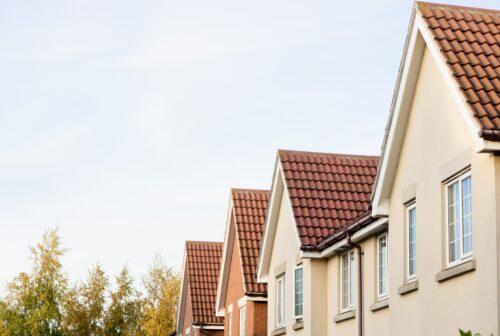
Whether you consider yourself warm blooded and constantly turn the thermostat down to 15 degrees, or you prefer a toasty 23 when you walk through the door, the majority of us enjoy the benefits of a comfortable temperate when we get home.
However, the ‘majority’ doesn’t include the 11% of households in England, 34% in Scotland, 14% in Wales and 24% in Northern Ireland who live in fuel poverty[i] and do not have the luxury of choice. People are making unacceptable decisions such as ‘heat or eat’, driving families into poorer health and exacerbating wider social outcomes.
The UK Government Warm Homes Plan was published last month, presented by the Department for Energy Security & Net Zero to “cut bills, tackle fuel poverty, create good jobs and get us off the rollercoaster of international fossil fuel markets.”[ii]
We’ve unpacked the four key aims of the warm homes plan and what it means for communities:
1. Cutting bills: As of 2025, households owed £4billion in dept to energy suppliers. This model is not sustainable or beneficial for any party. The warm homes plan will see things improving, starting with an average reduction of £150 a year of energy bills from April 2026.
What this looks like in reality will differ depending on the home and the people living there. For social housing renters there will be wider infrastructure improvements such as district heating that trickle down into pounds saved.
For new build homes there will be a focus on renewables in every home, moving away from volatile gas markets. As an industry we need to prioritise the infrastructure and delivery models that support this while we strive to meet housing targets.
If you live in a three-bed home, you could save between £450 and £550 annually on bills. We need to consider how we tell this story as we engage local people on new housing development.
As we tell stakeholders about the benefits of a safe, warm home we need to also tell them about the value add back to the economy. More savings means more disposable income and more opportunities to alleviate poverty for many of the most vulnerable.
2. Tackling fuel poverty: 3.7 million households live in fuel poverty, including 1 in 5 private renters, and 943,000 families with dependent children. The Plan aims to see one million of these households out of fuel poverty by 2030 through public investment and new minimum energy efficiency standards for private and social landlords.
The NHS are spending an estimated £900m annually as a result of cold homes. With the heightened risk of damp and mould, cutting back on energy and underheating homes can increase the risk of respiratory and cardiovascular disease, heart attack, stroke, hypothermia, and infections.
We know the opposite to be true. Our Impact of a Home research helps developers clearly articulate the benefits of access to basics such as central heating, dishwashers and washing machines. For example our metrics show that when a rural household in Northamptonshire are given central heating there are £989 of annual social benefits.
3. Creating jobs: The plan makes a commitment to deliver “180,000 additional high-quality, well-paid, future-proofed jobs in energy efficiency and clean heating by 2030.” This will be though a mixture of UK made technology and training in green skills, as well as the Warm Homes Agency which will make partner-led, place-based delivery easier – something we advocate for and champion at every level of a project delivery.
For our industry we are already seeing the benefits of the £265m investment made in March 2025 into construction skills and training. New technical course, accredited programmes and apprenticeships are beginning to take shape. Something we are helping encourage young people into through our Next Gen work and partnerships with Careers Hubs across the country. This investment is supported by a further £7m a year into the heat training grant and warm homes skills programme will ensure we have a generation fit to take on new roles.
4. Addressing the climate crisis: The last five years has seen a volatile market, driving food, oil and energy prices beyond what we have seen before and out of reach for many. In January 2026 ONS reported that 3.81% of direct debit payments for gas and electric failed to process, compared to 2.29% in January 2025 and a significant rise form 0.91% in January 2019.[iii]
The UK governments response focuses on ‘home-grown’ fuels, prioritising battery storage, wind and solar power as well as ensuring more homes are connected to the grid. 1.4 million rural homes are still relying on oil and liquid petroleum for their heating and 86% of households in England use a natural gas-fired main heating system.
As we drive forward new towns, garden communities and large-scale development we anticipate greater focus on communal clean heating technologies, such as heat networks, clearer messaging about how to operate buildings efficiently and greater availability of green jobs locally.
Having somewhere warm and safe should not be a luxury of the few. We know the built environment can be a force for good and delivering buildings that integrate new technologies with high quality construction will pave the way to stopping fuel poverty, cutting costs for families and tackling the climate crisis.
[i] UK Common Library (April 2025 data) https://commonslibrary.parliament.uk/research-briefings/cbp-8730/
[ii] Warm Homes Plan (pg7) https://assets.publishing.service.gov.uk/media/696f8a3ec0f4afaa9536a0c4/warm-homes-plan-standard-print.pdf
[iii] Monthly Direct Debit failure rate and average transaction amount – Office for National Statistics
