Fragmented politics and the future of planning: what the local elections mean for development
The local elections have delivered one of the clearest signs yet that British politics is entering a more fragmented and unpredictable era. Across England, Scotland and Wales, voters have reshaped council chambers, weakened traditional party strongholds and accelerated the rise of smaller parties and independents.
The key question now is not simply who won or lost. It is what this increasingly fractured political landscape means for local decision-making, planning risk and engagement strategies over the next 12 months.
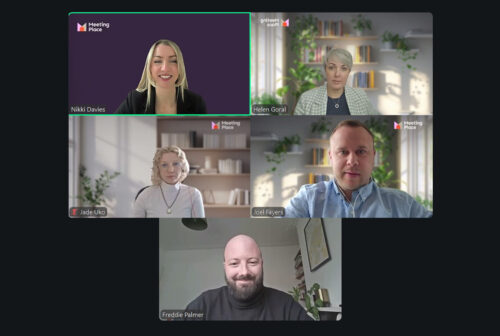
At Meeting Place’s recent elections debrief webinar, our team unpacked the results, explored the emerging political trends and discussed what clients should be thinking about now.
A fragmented political map
One of the strongest themes from the discussion was that the traditional two-party system is under sustained pressure.
While Reform UK dominated much of the media narrative, the reality on the ground is more nuanced. The Liberal Democrats strengthened their position in many areas, the Greens continued to make gains in urban centres and independents retained influence in several authorities. At the same time, both Labour and the Conservatives suffered significant losses in different parts of the country.
As Helen, our Midlands and North Director, noted, the result is “a much more fragmented political map than I think we’ve ever seen before”.
This fragmentation matters because it creates greater unpredictability in local governance. Many councils now sit under no overall control arrangements, while others are heading into coalition negotiations ahead of annual general meetings later this month.
For developers and promoters, understanding who actually holds influence locally is becoming more important than ever.
Reform’s rise is changing the conversation
The continued rise of Reform UK was one of the defining stories of the elections, particularly across parts of the Midlands and East of England.
However, the panel stressed that Reform’s growth should not be viewed through a simplistic lens. While national media coverage often presents a single “Reform wave”, local realities are far more varied
In some authorities, Reform administrations have shown themselves willing to engage pragmatically with development and regeneration proposals. In others, engagement has been more cautious or politically sensitive.
The key takeaway is that assumptions are dangerous.
As Helen explained, successful engagement increasingly depends on understanding the mindset and priorities of each administration individually.
Messaging matters more than ever. Proposals framed around tangible community benefits, affordability and cost-of-living improvements are likely to resonate more effectively than generic sustainability messaging alone
For example, discussions around renewable technologies are often landing better when framed through reduced household bills and energy security rather than broader environmental narratives.
The Liberal Democrats are gaining momentum
While Reform captured many headlines, the Liberal Democrats quietly had one of the strongest performances of the elections.
In areas such as Surrey, Hampshire and parts of the South West, the party secured significant gains and strengthened its position ahead of future local government reorganisation and mayoral contests.
The results in Surrey are particularly important. Both shadow unitary authorities returned strong Liberal Democrat majorities despite the county previously being Conservative-led. That has major implications for future local governance, decision-making and political priorities as reorganisation progresses.
The Liberal Democrats increasingly see themselves as the party capable of “charging up the middle” in a fractured political environment.
For planning and development projects, this means engagement strategies need to account for growing Liberal Democrat influence in areas where they may previously have been considered secondary political players
The Greens are no longer a single-issue party
Another important shift discussed during the webinar was the continued evolution of the Green Party.
The Greens performed strongly in several urban areas, particularly in London and Bristol, but the panel emphasised that Green politics can no longer be reduced to environmental issues alone.
Freddie highlighted that conversations with Green administrations increasingly focus on social sustainability as much as environmental sustainability
Affordable housing, public realm improvements, healthy communities and social value are often central to discussions around development proposals
Importantly, Green-controlled or Green-influenced councils are not universally anti-growth. In some places, they are actively supportive of development that aligns with their broader social and environmental objectives.
Again, the lesson is that local political nuance matters.
Engagement will be critical
Across the discussion, one message came through consistently: proactive political engagement has never been more important.
The old assumptions about political control no longer hold. Councils are increasingly fragmented, local issues matter deeply and political allegiances are shifting quickly.
In this environment, successful projects will be those that:
- understand local political dynamics early
- engage broadly across parties and stakeholder groups
- build visible local support
- communicate community benefits clearly
- adapt messaging to local priorities
- reduce perceived political risk for decision-makers
As Joel noted, developers should increasingly think about early-stage stakeholder workshops and broader engagement strategies that help depoliticise proposals before they become election issues.
Opportunity within the uncertainty
While the political picture may feel unstable, the panel’s overall message was ultimately a positive one
This is not a moment to retreat from engagement or pause projects. It is a moment to become more politically aware, more locally focused and more strategic in how projects are communicated
As Jade put it during the webinar: “Look for the opportunity in the chaos.”
That opportunity will come from understanding the changing political landscape before others do.
