Budget, boundaries & big decisions: What lies ahead for development in 2026
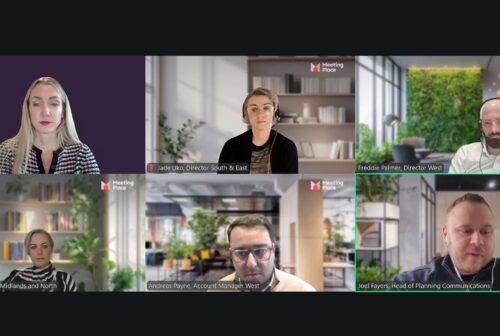
Our recent webinar, “Devolution, decisions & development: What LGR and the Autumn Budget mean for the sector,” brought together Meeting Place regional leads to unpack two major forces shaping the development landscape: the Autumn Budget and England’s sweeping Local Government Reorganisation (LGR). With attendees spanning housebuilders, planners, architects and investors, the conversation centred on what these shifts mean in practice for delivery, decision-making and confidence across the sector.
Getting Britain building
The Budget was the natural starting point- and the consensus was clear. While the Chancellor talked up ambitions to “get Britain building,” the follow-through fell short. Despite early hints of a Budget that might finally unlock housing delivery, the measures ultimately offered more political optics than industry substance. Additional planning capacity funding was welcomed, but unlikely to shift the dial meaningfully on performance or timelines. And the prolonged speculation ahead of the announcement had already cooled activity, adding further uncertainty to an already fragile market. As Helen Goral, Regional Director for Midlands and North, said: “while the end to speculation provides a level of stability, the opportunity to create certainty was missed”.
Audience sentiment mirrored the panel’s assessment: not a single respondent felt the Budget met expectations, and almost 80% lacked confidence in hitting delivery targets for 2026.
Local Government Reorganisation – the magic bullet?
LGR, however, emerged as the far more consequential backdrop for the sector. With six new mayoral areas heading toward elections in 2026 and dozens more devolution proposals on the table, councils across the country are pouring huge officer and member resource into navigating the reforms. In some areas multiple competing proposals remain live; in others political tensions between councils are shaping local preference for unitary boundaries. Proposal writing is technically demanding and time-consuming often pulling senior officers away from planning regeneration and service delivery. Andreas Payne, Account Manager in our West team, is also a cabinet member in his local authority. He noted “The volume of officer resource and member resource has been huge… We still don’t know what the expectation on us as a local authority is going to be from a budget point of view, for staff resourcing, just for the next financial year.”
Despite this, Freddie Palmer, Director in our West region pointed out that the changes could be “very exciting” and the potential prize is significant. Fewer better-resourced and more strategically aligned authorities could provide clearer leadership more coherent plan-making and more consistent decision-making. But the journey to that point, stretching through 2028, will be characterised by political flux, bandwidth strain and shifting centres of influence.
Implications for developers
One recurring message for developers was the importance of early wide-ranging engagement. With regional and county elections next year, leadership structures changing, mayoral powers still uncertain and even the “job description” for new mayors yet to be fully defined, traditional assumptions about who holds influence no longer apply. Independent candidates may rise where party selections disappoint, while existing councillors may become increasingly individualistic as they face boundary changes or uncertain futures. As Jade Uko, Director for South and East, noted: “Cambridgeshire and Peterborough Combined Authority came out of special measures only last year… It’s not a magic bullet.”
Against that backdrop our panel urged a renewed focus on clarity accessibility and strategic storytelling. Demonstrating alignment with wider regional goals, beyond ward boundaries, will become even more important as strategic planning powers evolve under new devolved structures.
As noted by Joel Fayers, Head of Planning Communications:
We’re already advising clients to start speaking to additional stakeholders than we would usually recommend, because a minority party could increase significantly in prominence if that party has a mayor from May.
Summary: Expect the unexpected
- Budget rhetoric outweighed reform: Despite strong language on building, practical measures for housing and planning were limited.
- Market uncertainty persists: Speculation around the Budget and tax changes has further dampened already fragile confidence.
- LGR will reshape decision-making: Dozens of areas face new structures mayoral elections and shifting political leadership.
- Officer capacity is stretched: Proposal development is diverting resource from planning regeneration and service delivery.
- Mayor powers remain inconsistent: Strategic planning won’t be guaranteed; powers will vary by area and may require separate applications.
Key takeaways: Engagement is key
- Look to broaden engagement: Future influence won’t map neatly to today’s committee structures, independents and newly empowered parties will matter.
- Clear accessible information helps cut through the noise: Simple strategic summaries are invaluable for councillors navigating heavy workloads.
- Look at how your projects align with wider political objectives: ensure messaging reflects this.
- Engage with community stakeholders: those on the ground may not be aware of upcoming political changes. Make sure you are communicating the benefits of your scheme to local residents.
The next 18 months promise elections, shifting power bases and significant structural upheaval. But with thoughtful engagement and a clear understanding of political dynamics, the development sector can still chart a confident path through the uncertainty. As best said by our CEO and chair, Nikki Davies: “We are working on the ground, speaking directly to council leadership up and down the country. We can give you insight into the level of chaos to expect and ways to cut through the noise.”
